Building a home can feel overwhelming. Field Notes shares practical guidance, insights, and updates from Hoose, alongside clear answers to common questions.
Clear thinking for building well.
Hoose Insights



Notes from Hoose

-
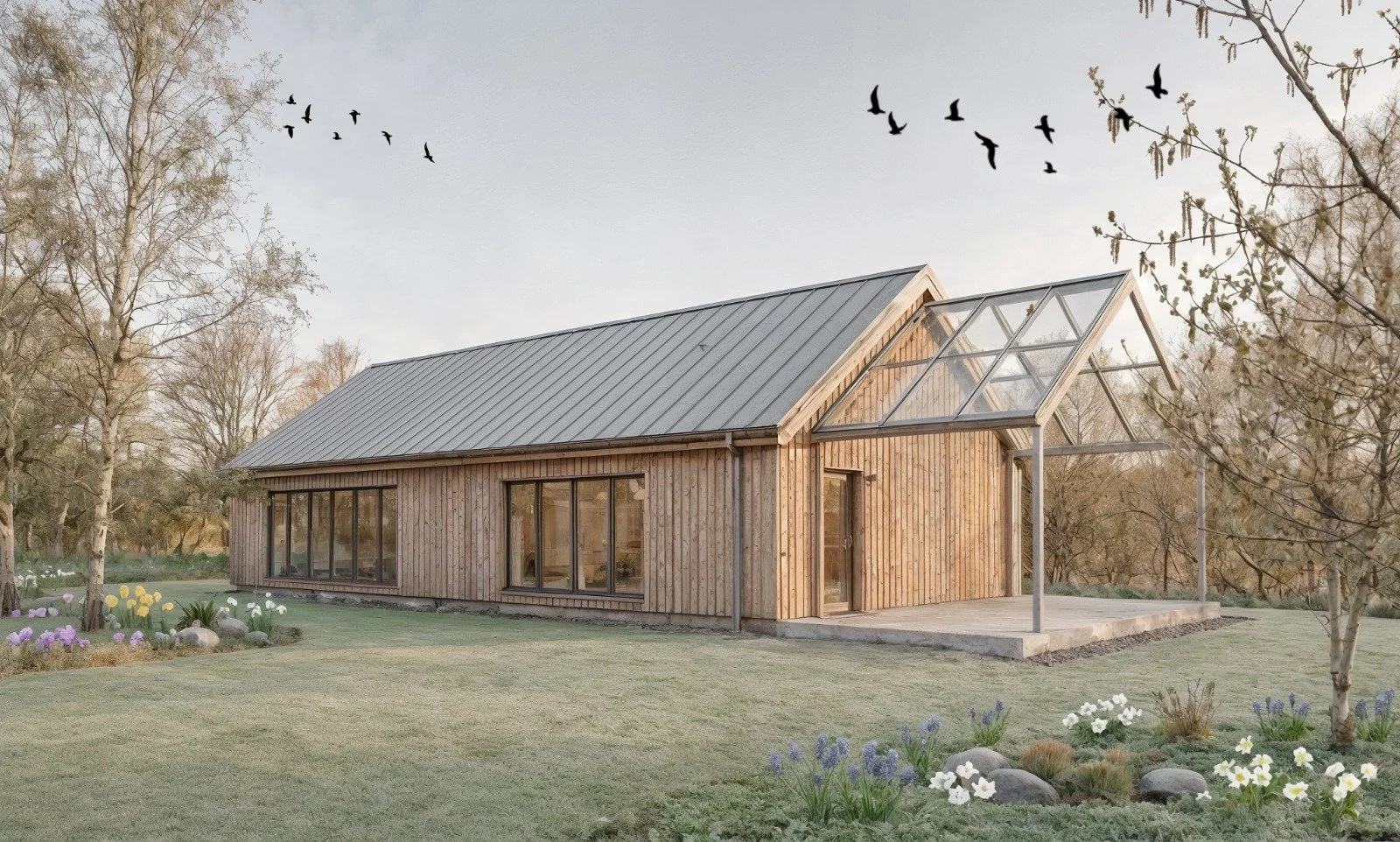
A Hoose is a regenerative home delivered through an end-to-end approach, from land-to-living. Unlike a typical self build where you coordinate multiple parties and make hundreds of decisions alone, Hoose guides the full journey with a clear process, trusted partners, and transparent decision making. The difference is not just the home you end up with, but how supported and confident you feel along the way.
-
If you already have land, we can assess suitability early, looking at access, services, planning context, ground conditions, orientation, and opportunities for a great home and landscape. If you don’t have land yet, we can support land search and evaluation, helping you avoid common risks and focus on plots that can realistically deliver the home and lifestyle you want.
-
Yes. The principles stay consistent, healthy indoor environments, low energy demand, thoughtful materials, and a strong connection to nature. In rural sites this often means responding to landscape and climate. In urban sites it may mean privacy, acoustics, daylight strategy, and smart use of space. We tailor the approach to the setting rather than forcing a one size solution.
-
Hooses are designed for people who want a home that feels calm, healthy, and future-ready. That includes families and individuals who want comfort and low-running costs, downsizers who want simplicity and quality, and retirees who want reliability, peace of mind, and a home that is easy to live in over time.
-
Yes. We design with long-term flexibility in mind. That can include step-free access, adaptable room use, future-proofed structural zones for later changes, and layouts that support different stages of life. We aim to reduce the chance you outgrow the home or need major disruption to adapt it later.
-
At Hoose, we offer two routes: bespoke homes and pre designed homes.
Bespoke is fully tailored, shaped around your land and how you want to live.
Pre-designed homes are based on proven designs that give clarity on cost and performance, while still adapting to your plot and priorities.
-
You can shape the layout, the feel, the finishes, and the features that matter to you. We will guide you on what is worth investing in for long-term comfort and running costs, and where simplicity often delivers the best outcomes.
-
Yes. Many plots have constraints, slope, access, planning sensitivity, views, wind exposure, neighbouring properties, or services. We design in response to those realities, and we are honest early if a site is likely to create disproportionate cost or risk.
-
Yes, where planning and site constraints allow. We can design for future extension zones, loft conversion readiness, or flexible internal layouts. The goal is to make future change possible without undermining performance or comfort.
-
Hooses can be configured across a range of sizes and layouts, from compact homes to larger family houses. The right size is guided by your land, budget, lifestyle, and how you want the home to work day to day. We explore this early so you are not over building or under sizing.
-
Regenerative means the home is designed to give back more than it takes. In practice that looks like lower carbon materials, very low energy demand, healthier indoor spaces, careful water and landscape thinking, and a supply chain approach that aims for circularity. It also means making choices that strengthen long-term resilience for people and place.
-
We prioritise biogenic materials that store carbon for the life of the building, alongside low embodied carbon systems and efficient design that reduces operational emissions. Environmentally positive also includes how the home supports the site and local ecosystem through landscape strategy, water management, and biodiversity support.
-
We look at the whole site, not just the building footprint. That can include habitat creation, native planting, soil and water protection, and designs that reduce hard landscaping where possible. We also consider lighting, boundary treatments, and drainage strategies that affect local wildlife and ecology.
-
We look at the whole site, not just the building footprint. That can include habitat creation, native planting, soil and water protection, and designs that reduce hard landscaping where possible. We also consider lighting, boundary treatments, and drainage strategies that affect local wildlife and ecology.
-
We design for durability, repairability, and climate resilience. That includes robust detailing, moisture safe assemblies, overheating risk management, and low reliance on complex systems. The aim is a home that stays comfortable and efficient as weather patterns change.
-
Hooses are designed to reduce energy demand significantly compared to standard construction, using fabric first principles and efficient systems. Running costs depend on size, occupancy, location, and energy tariffs, so we discuss realistic expectations based on your project rather than offering generic figures.
-
Yes. Comfort comes from a stable internal temperature, good solar control, airtightness, insulation, and ventilation design. The result is a home that feels warm in winter, avoids summer overheating, and remains steady rather than spiky.
-
Indoor air quality is managed through careful ventilation design, moisture control, and material choices that avoid unnecessary toxins and off gassing. We focus on fresh air, humidity balance, and systems that are easy to understand and maintain.
-
Yes. Good acoustic comfort is part of the overall wellbeing approach. We consider insulation, airtightness, glazing, layout zoning, and material choices to reduce noise and create a calmer indoor environment.
-
Hooses are designed to support healthier living through air quality, stable temperatures, good daylight, and safe material choices. We also design with practical everyday life in mind, including storage, durability, and layouts that reduce stress and support independence
-
Technology is chosen to support comfort and efficiency without adding unnecessary complexity. Typical inclusions are efficient heating and hot water systems, high performance ventilation, and smart monitoring where it genuinely adds value. What is standard will be confirmed in your proposal so it is always clear.
Frequently Asked Questions
-
No. Hoose can work with private clients, investors, developers, and community led projects where values and goals align. The key is a shared commitment to quality, transparency, and long term outcomes.
-
Yes. We often recommend lean tech, focusing on fabric performance first and keeping systems simple. Where higher tech solutions are beneficial, we explain the why and ensure they remain user friendly.
-
Yes. We design with maintainability in mind, including access for servicing and clear documentation. Many systems can be upgraded over time, and we will advise on what to plan for now to keep future options open.
-
We specify systems that are proven, widely serviceable, and straightforward to operate. We provide clear handover guidance and support, and we design homes to perform well even if you are not constantly managing settings. If something fails, the home remains safe and functional, and we support resolution through aftercare.
-
Land-to-living means we support the full journey, from finding or assessing land, to design, planning, procurement, build delivery, and handover. It also includes helping you settle in and understand how the home performs, so the experience is not just completion, but confident living.
-
Projects typically follow stages such as discovery and feasibility, concept design, planning, technical design, procurement, construction, and handover. Timescales vary based on planning, site complexity, and design scope. We provide an honest programme early and update it transparently as the project progresses.
-
You can be as involved as you want in design choices and priorities, but you should not have to manage the process alone. Hoose coordinates delivery and keeps you informed with clear decisions at the right moments, so the experience feels guided rather than overwhelming.
-
Quality is built through clear specifications, trusted partners, and consistent site oversight. When changes or delays happen, we communicate early, explain impact, and agree next steps together. We aim to reduce surprises through good planning, but we are also honest when reality shifts.
-
Yes. We support the planning process with strong design rationale, performance based arguments, and a clear story about how the home fits its place. Planning outcomes vary by location and policy context, but we help you navigate that landscape with clarity and realism.
-
Cost depends on size, site conditions, specification, and scope. We provide transparent cost ranges early and refine them as design develops. What is included will be clearly defined, typically covering design, key performance elements, and construction delivery, with options for upgrades and scope adjustments.
-
They can be, depending on specification and site, but they are designed to deliver long-term value through lower running costs, better comfort, durability, and future resilience. The question is not only build cost, but lifetime cost, risk, and quality of living.
-
We focus on cost predictability through early feasibility, clear specifications, and value-based decisions. Designs can often be adapted to budget by adjusting size, complexity, finishes, and certain features without undermining core performance. We will be honest about what savings are real and what would compromise outcomes.
-
Long-term benefits typically come from reduced energy demand, lower maintenance, better durability, and a home that stays desirable as standards and expectations rise. Many clients also value the wellbeing benefits and peace of mind that come from stable comfort and healthy indoor air.
-
Living in a Hoose should feel calm, comfortable, and straightforward. Maintenance is guided by a clear handover pack and practical support, not guesswork. Aftercare focuses on helping you understand the home, address any early issues, and keep performance strong over time.
-
Landscaping can be included depending on project scope. We treat the landscape as part of the whole home experience, supporting biodiversity, water management, and the feeling of connection to nature that makes a home restorative.
-
The Hoose Community is how we keep the relationship going beyond handover. It is a space for shared learning, support, and inspiration between clients and the wider regenerative building ecosystem.
-
You start by sharing your land situation, goals, and constraints. The first call is about listening, clarity, and practical next steps. We will tell you honestly what feels feasible, what may be challenging, and what we would recommend as the first stage.
-
There is no obligation. The best time to contact us is before you have locked in major decisions, such as land purchase, layout assumptions, or planning direction. Early guidance reduces risk and helps you make confident choices.
-
If you want a home that feels better to live in, costs less to run, and stands up to a changing future, then yes. Regenerative building is about quality of life as much as environmental responsibility. It is an investment in comfort, resilience, and a lasting legacy.
-
It doesn’t have to. Building can be stressful when you are carrying uncertainty alone. Our role is to reduce complexity through step-by-step guidance, clear explanations, and steady communication, so you feel supported and in control.
-
We cannot promise market outcomes, but we can design for what tends to hold value over time: low running costs, high comfort, durable materials, healthy indoor environments, and future ready performance. As regulations tighten and buyers prioritise efficiency and wellbeing, homes built to higher standards are likely to remain desirable.
Still need a little help?
Tell us a little about what you’re thinking about, and we’ll get back to you to help where we can. We’re happy to answer questions or explain how Hoose works. There’s no obligation and no pressure to take things further.
_____
Practical Guides for Better Decisions
Whether you're exploring land, understanding costs, or planning your future home, our guides are designed to help you make informed decisions with greater confidence at every stage of your journey.
_____